Marianne Rosenberg
Biography
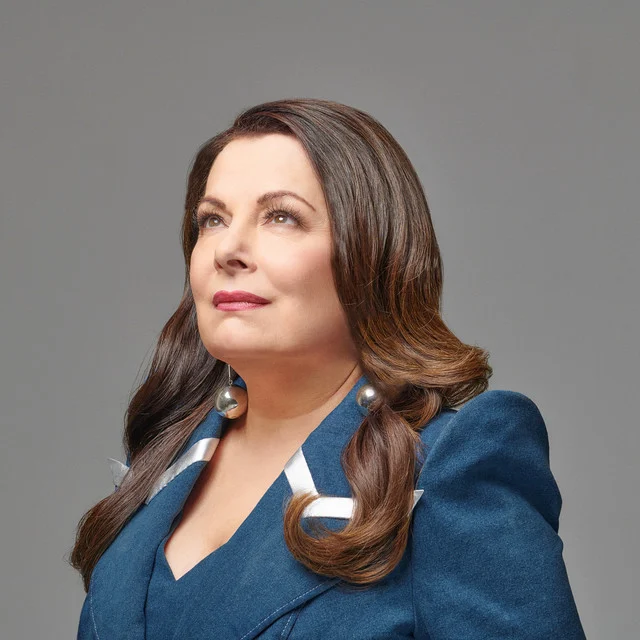
Marianne Rosenberg is a German singer and singer-songwriter, born on March 10, 1955, in Berlin. She is the daughter of Otto Rosenberg, a Sinto survivor of the Porajmos, the genocide of Roma and Sinti during World War II.
Her career began at the age of 14 when she won a talent contest. She achieved early success with singles like Mr. Paul McCartney (1970). That same year, she represented Germany at the Festival Internacional da Canção in Rio with the song Wie weiß ich, daß es Liebe ist.
In the mid-1970s, her producer introduced a more modern sound, the “Philly sound,” into her music. This evolution led to major hits like Er gehört zu mir and Ich bin wie du, establishing her as one of the leading schlager singers of the decade. She participated several times in the German national selections for the Eurovision Song Contest but never reached the final.
In the 1980s, she shifted her image and musical style, moving away from traditional schlager to incorporate influences from the Neue Deutsche Welle (German New Wave). She collaborated with musicians like Rio Reiser and Wolf Maahn and became an advocate for queer rights.
In the late 1980s and 1990s, remixes of her greatest hits revived interest in her music. She continued to release albums such as Luna (1998), Für immer wie heute (2004), and I'm a Woman (2008). Her work also extended to jazz and chanson performances.
In 2006, she published her autobiography *Kokolores*. In 2020, to celebrate her 50-year career, she released her 20th album Im Namen der Liebe, which reached number one on the German charts. The follow-up album, Diva (2022), was also commercially successful. In 2023, she participated in *The Masked Singer* and released her 22nd studio album, Bunter Planet, in 2024, which entered the top 10 of the German charts.